
wrgteh
sampah
perpus
kembangsepasang
index
pul
perpus
allahuakbar

Falling Short
I failed the e,
and it pulled my spirit down—
a quiet heartbreak
echoing in my chest.
I’m afraid this stumble
will follow me into my days,
shadowing my steps—
but I pray it won’t.
I promise myself
I will stay grateful,
I will stay cheerful,
even when the road feels heavy.
But still—
I need a job,
I need money,
I need a door to open.
May someday,
and hopefully soon,
God’s gentle hands
place a good job in my path—
a blessing waiting just for me.

My Heaven of Quiet Shelves
My Heaven of Quiet Shelves
I come to the library often,
and just as often I leave my things behind—
yet nothing is ever lost,
nothing stolen, nothing touched.
It feels like the universe guarding me,
saving my place,
reserving my corner of peace.
The library is my heaven.
I love it more than words can hold.
So different from back home—
here, everything feels thoughtfully made.
Outlets everywhere,
comfortable tables and chairs,
a silence so soft it sharpens my mind.
Perfect for focusing,
perfect for finishing my work.
Fast Wi-Fi,
cool in summer,
warm in winter,
and service that feels like pure kindness.
In this quiet sanctuary,
I find safety, comfort,
and a little bit of magic
every time I walk through the door.

Lost-in-Thought Picnic
A picnic day, yet lost in my own maze,
my bag forgotten—left on the bus
more times than I can count.
Confusion circles me like a restless wind.
Because the spoon was in the bag,
because the drink was in the bag,
because the money was in the bag—
and I carried too many things
with no bag at all.
And then, moments came
when I could have left my mark,
stepped forward, done something meaningful—
yet I let them drift away.
Frustrated with myself,
I whisper a quiet promise:
may this never happen again.

jamur

kampus ngumpul
piknik kampus
ke xiluo
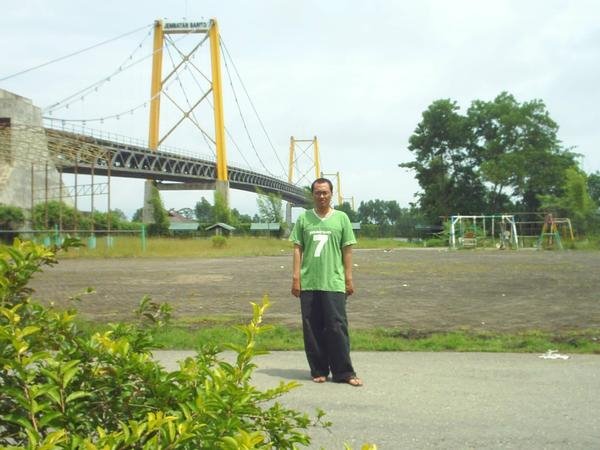
xiluo bridge
xiluo old street
rueichun soy sauce factory\
ma hwii tzu farm - natural soap
ji pin biotechnology farm - mushroom
chien chiao gu ranch
allahuakbar

A whisper of envy stirs my heart,
I dream of Japan, its streets, its art.
Yet deep inside, a voice reminds me clear:
Fortune has its path, its own frontier.
Rejeki flows where it’s meant to be,
No swap, no loss, no need to plea.
If fate allows, I’ll see that land,
Perhaps not now, but by divine hand.
Maybe the journey shifts, a different place,
But trust in time, in God’s embrace.
Patience blooms, and hope will sing,
InsyaAllah, blessings will bring.

kampus ambil soal ujian kompre
pul
jumatan
pul
wrgkalimantan
wrgkopi
perpus
kampus soal diminta lagi
perpus
doktergigi
pul
anisa
wrg jepang
uniqlo
anisa
perpus
allahuakbar

Between Fear, Blessing, and the Unknown
Mrs. Rose calls my name again—
another conference,
Europe,
and suddenly the old shadows wake.
The memories still cling to me
like cold wind on a winter street.
I never wished to return there.
I told her softly,
I told her honestly—
the fund is too high,
my pockets too small,
and I don’t think
I’m that rich in this world.
But if there is fortune,
if God opens a path,
who knows—
I will follow,
just go with what heaven allows.
Even though the letter of refusal
already sits in my hand,
its words fragile
but honest—
I will not be able to join.
I don’t like what happened before,
but every journey holds
a secret meaning,
every struggle
a hidden positivity
waiting to be found.
Now I stand in the middle of two roads,
heart trembling,
mind tangled.
I am confused, God—
help me.
I don’t know which way to walk.
I surrender, God.
Take this confusion from me.
Guide this clueless heart
into the light
You choose.

Maybe There’s a Meaning
The schedule should be every six months,
Simple, routine, nothing new.
But for me it shrinks to three—
“Your teeth are bad,” the doctor says,
“Come often, it’s better for you.”
Others pay fifty every half-year,
I pay one-fifty every season.
Hmm… strange, right?
But maybe inside all this inconvenience
There’s a hidden little reason.
Maybe the doctor likes me—
laughs at my own fantasy—
Maybe it’s just a silly dream,
A harmless wish floating free.
Wkwkwkkw…
Just a joke, just a thought,
But who knows?
Life loves its secret plots.

something happened
as I walked through the quiet corridors of campus
I came, received the papers, and went back home
then a message arrived,
chasing the echo of my footsteps
reminding me that this world is full of rules and secrets
yet my heart stayed calm
because perhaps
God hid a small wisdom there
between human routines and hurried moments
a gentle path teaching me awareness
and surrender to His plan
alhamdulillah
for the protection, for the guidance
for the blessing that did not come as answers
but as peace within my chest
thank You, God
for guarding every step I take
may tomorrow unfold as it should
and may I face everything
with honesty, courage, and trust

A Prayer Against Shadows
From whispered talk, it seems they carry hate for Mrs. L
and I feel the storm they cast, simply because I share her roof.
But I lift my heart to heaven, asking for a shield of light—
that God may guard my path from those who walk with poisoned intent.
May every cruel spirit be kept far, farther than the horizon’s reach.
May every hidden plot against me crumble into dust before it forms.
May those who harbor darkness taste the echo of their own design—
for karma walks with unwavering steps.
And as their shadows fade,
may I stand untouched, protected,
wrapped in grace stronger than any malice on this earth.

alhamdulilah bangun pagi
kampus run eror
pul
kampus workshop herbal tea
oia eror
pul
mlm atm
index
toko klontong
allahuakbar

semaleman ga tidur
femi kopi
meeting pagi ngantuk banget
pul makan
kuliah siang
pul
pxmart beli cream puff tiba2 nyidam
kampus kuliah malam
dingin banget
hotpot merah
allahuakbar

For academic presentations, visualization is key to making your content clear, engaging, and memorable. Here’s a comprehensive guide to different types of visualizations and best practices:
A. Charts & Graphs
Bar Chart: Compare discrete categories. Great for showing differences between groups.
Line Chart: Show trends over time. Useful for longitudinal studies.
Pie Chart: Display proportions. Use sparingly—only for a few categories.
Scatter Plot: Show relationships or correlations between two variables.
Box Plot (Whisker Plot): Show distribution, median, quartiles, and outliers.
Histogram: Show frequency distribution for continuous data.
B. Tables
Use when exact values matter.
Keep tables simple, with minimal colors.
Avoid overloading with too many rows/columns.
C. Diagrams & Flowcharts
Concept Maps: Visualize relationships between ideas or concepts.
Flowcharts: Show processes or sequences in research methodology.
Venn Diagrams: Show overlaps between sets or categories.
D. Infographics
Combine text, icons, and visuals to summarize results or key ideas.
Useful for summarizing complex findings for conferences.
E. Heatmaps & Geographical Maps
Heatmaps: Visualize intensity, correlations, or density (e.g., survey results, gene expression).
Maps: For spatial data, e.g., population studies or geographical distributions.
F. Images & Figures
Photos of experiments, fieldwork, or study samples.
Ensure high resolution; label clearly.
Clarity First
Every figure should communicate one main point.
Avoid cluttered visuals—white space is your friend.
Consistency
Use consistent colors, fonts, and styles across slides.
Maintain scale and axes labeling.
Use Color Wisely
Color should highlight differences, not decorate.
Consider color-blind friendly palettes (e.g., ColorBrewer).
Label Everything
Titles, axes, legends, units.
Always provide a short description of the figure in your talk.
Data Integrity
Don’t distort axes or manipulate visuals to exaggerate findings.
Use error bars when appropriate.
Keep it Simple
One key point per slide.
Avoid text-heavy slides—visuals are meant to supplement your speech.
Excel / Google Sheets: Simple charts and graphs.
Tableau / Power BI: Advanced interactive visualizations.
R (ggplot2) / Python (Matplotlib, Seaborn, Plotly): Custom, publication-quality plots.
Canva / PowerPoint / Keynote: Infographics, diagrams, and polished visuals.
BioRender: Scientific diagrams for biology/medicine.
Slide Title: “Impact of AI on Student Learning Outcomes”
Left: Bar chart showing performance across control vs experimental groups
Right: Short bullet points summarizing key insights
Bottom: Citation or note if data is adapted

“God Help Me, Please”
If there’s no her,
things could really spiral—
oh… it’s just too much,
everything feels so heavy,
like a long road
with no end in sight.
I just want this to be over,
I want my heart to stop trembling,
I want my breath to feel light,
I want my life to feel bright again.
God… hear me tonight,
hold my weary hand,
erase the fear gnawing at my chest,
strengthen my faltering steps.
If this is a test,
let me pass it peacefully.
If this is a storm,
let me endure until the light returns.
God… help me please,
I don’t want to fall again,
I want to rise—
slowly, painfully,
even if the world feels heavy,
I still believe
You’ve never left.

A Socratic dialogue is a style of conversation where one person (usually a teacher) asks guiding questions to help another person think deeply, analyze ideas, and discover answers by themselves.
It is not about giving direct answers — it is about leading someone to find the truth through questioning.
The teacher asks questions like:
“Why do you think so?”
“What evidence supports your idea?”
“Is there another possibility?”
The goal is to make the learner analyze, evaluate, and reflect.
Instead of telling the student the answer, the teacher guides them to find it.
It is not a debate.
It is a calm, slow, reflective conversation.
Socrates used questioning to teach his students about truth, morality, logic, and knowledge.
Teacher: What is courage?
Student: Being brave.
Teacher: Does being brave mean you are not afraid?
Student: No, maybe being brave means acting even when you are afraid.
Teacher: Good. So is courage the absence of fear or something else?
Student: I think courage means doing the right thing even if you are scared.

Let Karma Speak
Acting like a teacher,
as if they know the wind,
as if they understand life better than anyone,
when their own steps stumble
over a foolishness they refuse to see.
Sometimes my heart wants to shout,
to look them in the eyes and say,
“Enough. Stop.”
But I’m learning to calm the storm,
learning not to plant dark thoughts
in the garden of my own heart.
Let it be…
let their words drift away with the wind,
let their path lead them
to whatever truth they must face.
For every action,
a shadow always follows,
and God never forgets
to write the ending of every story.
If karma must arrive,
let it come on its own—
without my wish,
without staining my heart.
I simply want peace.

Mahasiswa membuat prediksi tentang aturan atau makna suatu bentuk bahasa sebelum dijelaskan oleh dosen.
Dosen menampilkan beberapa kalimat tanpa memberi penjelasan:
She is cooking right now.
They are studying in the library.
I am not working today.
Dosen bertanya:
“Menurut kalian, apa kesamaan kalimat-kalimat ini? Kapan bentuk ini digunakan?”
Menuliskan prediksi seperti:
“It describes actions happening now.”
“The structure seems to be ‘be + verb-ing’.”
“Maybe it’s used for temporary actions.”
Mahasiswa melakukan pengamatan melalui contoh, video, dialog, atau aktivitas nyata.
Dosen memutar video pendek (10–20 detik) tentang orang yang sedang melakukan aktivitas (cooking, reading, cleaning).
Mahasiswa mengamati dan menuliskan kalimat deskriptif berdasarkan video.
“The boy is cleaning the room.”
“The woman is cooking dinner.”
Mahasiswa membandingkan hasil pengamatan dengan prediksi mereka.
Mahasiswa menjelaskan mengapa struktur tersebut digunakan lalu menyimpulkan pola bahasa.
Dalam kelompok kecil, mahasiswa berdiskusi tentang:
Fungsi present continuous
Pola gramatikal
Perbedaan dengan present simple
Fungsi: “To describe actions happening right now.”
Struktur:
Subject + am/is/are + verb-ing
Dosen meluruskan konsep yang kurang tepat.
Mahasiswa mengevaluasi pemahaman sendiri dan menerapkan ke konteks baru.
Menulis 5 kalimat original tentang apa yang sedang terjadi di kelas.
Mengerjakan mini-quiz:
“Write the correct form: She ____ (study) English now.”
Refleksi:
“Apakah prediksi awal saya benar?”
“Apa yang saya pahami setelah observasi dan penjelasan?”

Siswa membuat dugaan awal tentang suatu fenomena berdasarkan pengetahuan sebelumnya.
Guru memberi stimulus (gambar, video, masalah nyata).
Siswa menuliskan prediksi mereka.
Tujuan: membangkitkan rasa ingin tahu dan aktivasi pengetahuan awal.
Contoh: “Apa yang akan terjadi jika garam dicampur ke dalam air hangat?”
Siswa melakukan pengamatan langsung melalui eksperimen, demonstrasi, atau simulasi.
Siswa mencatat fakta yang terlihat.
Guru memfasilitasi, bukan memberi jawaban.
Tujuan: membandingkan prediksi dengan kenyataan.
Contoh: Siswa benar-benar mencampurkan garam ke air hangat dan melihat proses pelarutannya.
Siswa menjelaskan hasil pengamatan dengan menggunakan konsep ilmiah.
Diskusi kelompok dan penjelasan logis.
Guru membantu menghubungkan konsep dengan hasil.
Tujuan: mengembangkan pemahaman ilmiah melalui refleksi.
Contoh: “Garam lebih cepat larut di air hangat karena partikel air bergerak lebih cepat.”
Siswa menilai kembali pemahaman, membandingkan prediksi–observasi–penjelasannya.
Menilai kesesuaian konsep dengan hasil eksperimen.
Guru memberi umpan balik dan klarifikasi.
Tujuan: memperkuat berpikir kritis dan metakognisi.
Contoh: Siswa meninjau kembali prediksi awal dan menuliskan apa yang berubah dan mengapa.

tokobuah1eror
tokobuah2eror
pxmartbeliminyak
tokobuah3
pulnaruhbarang
perpus
bhslpsalhamdulilah
wrgpremaneror
wrgstableyeror
kesasar
wrgceita
wrgkopi
perpusmpemalam
allahuakbar

sampah
perpus
anisa
wrg thai
jemput novinda
wrg thai novinda ultah
ngantar novinda
jemput anisa
atm
index
antar anisa
allahuakbar

jumatan
indolaris
lopanngantuk
tokoklontong
pulmasak
warkop
sampah
tokokampus
perpus
pulmakan
perpusmpemalam
allahuakbar

A Prayer for My Path
I thought it would be now,
news on the screen made me pause.
They come and go so easily,
as if the world opens its doors just for them.
Turns out tomorrow they’ll be here again,
visiting countless times,
their journeys paid for,
their dreams carried softly by fortune.
Meanwhile I stand here,
with no title,
no power to travel far and often.
Only a heart holding back its ache,
and prayers that never stop rising.
Oh God…
don’t let envy grow inside me.
Every blessing has its path,
every destiny has its moment.
Our sustenance will never be switched,
for You have written each portion by name.
InshaAllah,
one day,
when the skies give permission,
when time finally turns in my favor,
You will open that road—
the road for me to walk,
to see the world,
and to give thanks in every land
You allow me to touch.

A Prayer Under Taiwan’s Sky
I came with fragile hopes,
carrying dreams I planted long ago.
In the land of Taiwan,
I knocked on the door of opportunity—
wishing to become an English teacher,
wishing to find my place.
But that day,
the answer was not what I hoped for.
My name wasn’t called,
and my dream seemed to fall
like a leaf breaking free,
without even saying goodbye to the wind.
My sadness piled up,
turning into waves with nowhere to rest.
Oh God…
I call Your name in silence,
in the emptiness that tightens my chest.
Help me.
Lift this heart that has crumbled.
Give strength to my steps,
even though I failed today.
Grant me happiness
that cannot be stolen by one rejection.
Grant me work
that brings light to my days.
I want to work in Taiwan,
in the place where my dreams first grew.
I want to rise again,
even if tonight I cry alone.
Oh God…
hear my quiet prayer.
Stay with me
until this dream finally comes true.

alhamdulilah bangun pagi
famykopi
kuliahpagi
acara oia indian culture
pul jaket
toko baju bli jaket
tokobuah
tokoayam
allahuakbar

Program Studi: PGSD / Pendidikan
Semester: 1 Semester (16 Pertemuan)
SKS: 2 SKS
Mata kuliah ini membahas konsep budaya, komunikasi lintas budaya, dinamika interaksi antarbudaya, serta penerapannya dalam konteks pendidikan dasar. Mahasiswa diharapkan mampu memiliki kompetensi sikap, pengetahuan, dan keterampilan dalam memahami serta mengelola keberagaman budaya.
Mahasiswa mampu menjelaskan konsep dasar budaya dan elemen-elemennya.
Mahasiswa mampu menganalisis perbedaan budaya, dimensi budaya, dan potensi miskomunikasi.
Mahasiswa mampu menerapkan strategi komunikasi lintas budaya dalam konteks pendidikan.
Mahasiswa mampu menunjukkan sikap terbuka, empatik, dan menghargai keragaman budaya.
CPMK: 1
Sub-CPMK: Menjelaskan definisi budaya, CCU, dan urgensinya.
TP: Mahasiswa dapat mendeskripsikan budaya dan pentingnya CCU dalam konteks pendidikan.
Materi: Konsep budaya, definisi CCU.
Metode: Ceramah interaktif, diskusi.
Penilaian: Partisipasi (observasi).
CPMK: 1
Sub-CPMK: Mengidentifikasi elemen budaya (nilai, norma, kepercayaan, artefak).
TP: Mahasiswa mampu menyebutkan dan memberi contoh elemen budaya.
Materi: Values, beliefs, customs, artifacts.
Metode: Diskusi, mind-mapping.
Penilaian: Tugas ringkas.
CPMK: 2
Sub-CPMK: Menganalisis dimensi budaya.
TP: Mahasiswa dapat membandingkan budaya berdasarkan dimensi Hofstede.
Materi: Individualism–collectivism, power distance, uncertainty avoidance.
Metode: Studi kasus, diskusi kelompok.
Penilaian: Presentasi mini.
CPMK: 2
Sub-CPMK: Membedakan gaya komunikasi high context vs low context.
TP: Mahasiswa dapat memberi contoh perbedaan komunikasi antarbudaya.
Materi: High/low context communication.
Metode: Role-play, diskusi.
Penilaian: Observasi performa role-play.
CPMK: 2 & 4
Sub-CPMK: Menjelaskan identitas budaya serta risiko stereotipe dan prasangka.
TP: Mahasiswa mampu mengkritisi contoh stereotipe.
Materi: Identitas budaya, stereotyping, prejudice.
Metode: Studi kasus, refleksi individu.
Penilaian: Refleksi tertulis.
CPMK: 2
Sub-CPMK: Mengidentifikasi hambatan komunikasi antarbudaya.
TP: Mahasiswa dapat menganalisis penyebab miskomunikasi.
Materi: Ethnocentrism, anxiety, misunderstanding.
Metode: Diskusi, problem-based learning.
Penilaian: Analisis kasus.
CPMK: 3 & 4
Sub-CPMK: Menjelaskan model kompetensi lintas budaya.
TP: Mahasiswa mampu menilai kompetensinya sendiri.
Materi: Model Byram, Deardorff.
Metode: Self-assessment, diskusi kelompok.
Penilaian: Lembar penilaian diri.
Tes tulis / studi kasus.
CPMK: 3
Sub-CPMK: Menganalisis keberagaman budaya di kelas.
TP: Mahasiswa mampu merancang pendekatan pembelajaran sensitif budaya.
Materi: Budaya sekolah, hidden curriculum.
Metode: Diskusi, analisis video.
Penilaian: Tugas desain pembelajaran.
CPMK: 3 & 4
Sub-CPMK: Menerapkan strategi manajemen kelas inklusif.
TP: Mahasiswa dapat memberi solusi untuk konflik budaya di kelas.
Materi: Pendekatan inklusif, diferensiasi.
Metode: Problem-solving, role-play.
Penilaian: Observasi & laporan.
CPMK: 3
Sub-CPMK: Mengidentifikasi dan menyelesaikan konflik lintas budaya.
TP: Mahasiswa mampu merumuskan strategi resolusi konflik.
Materi: Jenis konflik, teknik resolusi.
Metode: Studi kasus, diskusi kelompok.
Penilaian: Analisis kasus tertulis.
CPMK: 2
Sub-CPMK: Menganalisis dampak globalisasi pada perubahan budaya.
TP: Mahasiswa dapat menjelaskan fenomena hybrid culture.
Materi: Global village, cultural hybridization.
Metode: Ceramah, diskusi artikel.
Penilaian: Ringkasan artikel.
CPMK: 3
Sub-CPMK: Menerapkan prinsip CCU di ruang digital.
TP: Mahasiswa memahami risiko miskomunikasi di media sosial.
Materi: Etika digital, misinformasi budaya.
Metode: Diskusi, studi kasus.
Penilaian: Tugas analisis.
CPMK: 2 & 3
Sub-CPMK: Menganalisis fenomena nyata interaksi antarbudaya.
TP: Mahasiswa mampu melakukan evaluasi kritis kasus.
Materi: Film, berita, wawancara.
Metode: Presentasi kelompok.
Penilaian: Rubrik presentasi.
CPMK: 3 & 4
Sub-CPMK: Menyajikan profil budaya dan implikasinya untuk pembelajaran.
TP: Mahasiswa dapat menyusun Cultural Profile Project.
Materi: Proyek akhir.
Metode: Presentasi.
Penilaian: Penilaian proyek + presentasi.
Tes tulis / portofolio.
Jika ingin ditambahkan rubrik penilaian, CPMK-SubCPMK diagram, atau versi format BAN-PT/SIAT kampus, saya bisa lengkapi.

Langit sore mulai memudar menjadi kelabu. Pemuda itu masih berdiri beberapa langkah dari makam kakaknya. Hujan sudah berubah menjadi gerimis, seperti air mata langit yang tak tega berhenti. Udara lembap menusuk tulang, tapi hatinya terasa lebih hangat — entah karena kenangan, atau karena bisikan lembut yang tadi seperti datang dari dalam batu nisan itu.
Dia menatap tanah yang mulai tergenang air.
“Mas… kalau aja kamu masih ada,” suaranya lirih. “Mungkin aku gak akan sepi kayak gini.”
Senyumnya getir, tipis sekali, nyaris tak terlihat.
“Mas tahu gak? Aku sekarang bahkan takut pulang ke rumah sendiri. Mama udah beda. Dia cuma lihat aku kayak beban.”
Dia menarik napas panjang.
Bayangan tentang rumah itu menyesakkan dada.
Suami baru ibunya selalu menatapnya dingin, penuh curiga, seolah kehadirannya adalah kesalahan. Dan adik tirinya… anak kesayangan yang selalu benar di mata semua orang.
Setiap kali dia mencoba bicara, semua berbalik menuduhnya.
‘Kamu keras kepala.’
‘Kamu gak tahu diri.’
‘Kamu selalu buat masalah.’
Dia memukul tanah dengan kepalan tangan. “Padahal aku cuma pengen didengar, Mas… cuma itu!”
Tangannya kotor, lumpur menempel di sela-sela jarinya. Tapi dia tak peduli.
Lalu, samar-samar, ia kembali mendengar suara itu.
Tenang. Hangat.
“Dik… Mas dulu juga pernah ngerasa sendirian.”
Pemuda itu terpaku.
“Mas dulu juga nangis diam-diam di kamar, tapi tetap senyum di depan kamu. Karena Mas gak mau kamu lihat Mas lemah.”
Air mata pemuda itu mengalir lagi. “Mas bohong… kamu selalu kuat.”
“Enggak,” suara itu seperti tertawa kecil. “Mas cuma pura-pura kuat supaya kamu punya tempat bersandar.”
Dia menunduk. Bibirnya bergetar. “Sekarang tempat itu udah gak ada, Mas.”
“Masih ada,” bisik suara itu lembut sekali. “Tempat itu sekarang di hati kamu.”
Sunyi kembali menyelimuti. Tapi kali ini, sunyi itu tak lagi menakutkan.
Dia memejamkan mata, membiarkan gerimis menyentuh wajahnya. Seolah setiap tetes membawa pesan dari kakaknya.
“Dik, hidup gak selalu adil. Tapi Mas pengen kamu terus jalan. Jangan berhenti cuma karena dunia nyakitin kamu. Kamu bukan sendirian.”
Pemuda itu tersenyum dalam tangisnya.
Dia berdiri, menatap nisan itu dengan mata yang masih merah, tapi lebih tegas dari sebelumnya.
“Mas, aku janji. Aku bakal kuat. Aku bakal terus jalan.”
Dia menunduk sekali lagi, lalu mengecup ujung nisan itu pelan.
“Terima kasih, Mas.”
Saat dia berbalik pergi, angin berhembus lembut dari arah nisan.
Bunga melati yang tadi ia letakkan terguncang sedikit — satu kelopak terlepas, terbawa angin, menari-nari di udara sebelum jatuh tepat di jalannya.
Pemuda itu melangkah pergi, menatap langit yang kini mulai memudar menjadi jingga.
Untuk pertama kalinya setelah sekian lama, dadanya terasa sedikit ringan.
Seolah beban yang selama ini menekannya… ikut terkubur bersama hujan, di sisi nisan yang mendengar.





.jpeg)
.jpeg)
.jpeg)


